


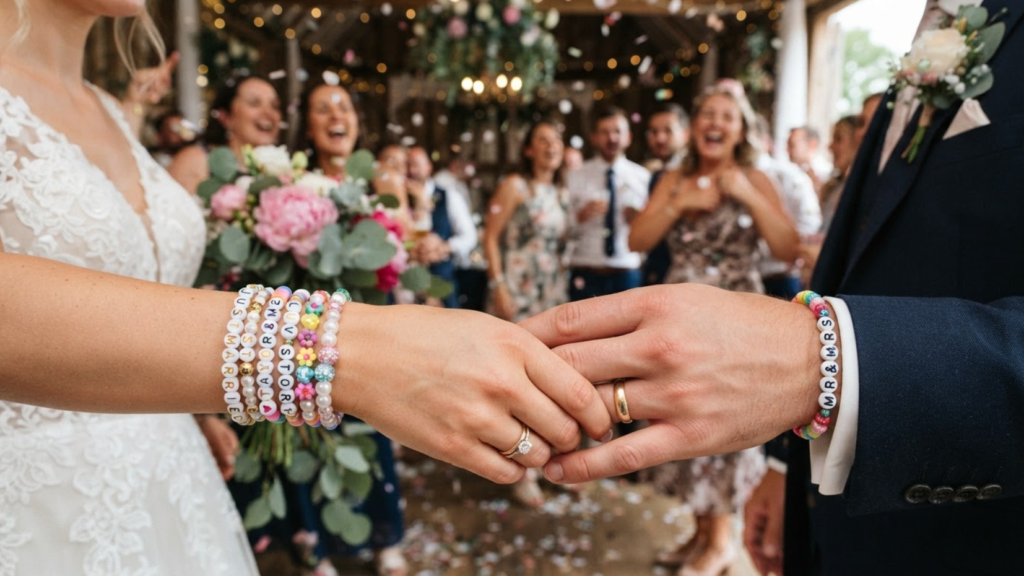
Taylor Swift didn’t buy a single ad placement. She didn’t hire a PR firm to orchestrate her wedding. She didn’t issue a press release. Yet on July 3, 2026, her marriage to Travis Kelce at Madison Square Garden generated 2.1 million social posts in 24 hours, triggered 2,600 tweets per minute the moment the MSG marquee lit up “JUST MARRIED,” and produced billions in earned media value. Brands scrambled to tie themselves to the moment. Venues saw booking spikes. Search engines buckled. This is the story of how two decades of relationship-building, masterful scarcity, and perfect timing created the most talked-about cultural moment of the year — and what every marketer, leader, and brand builder can learn from it.
The Moment the Internet Stopped
Here’s the number that tells the whole story: 2,600 tweets per minute.
Not from a product launch. Not from a Super Bowl halftime show. From a jumbotron outside Madison Square Garden lighting up with two words.
On July 3, 2026, the MSG marquee finally lit up “JUST MARRIED” — and the internet erupted. Large black SUVs had been arriving at the famous venue for hours, pulling into white tents set up outside. A large crowd of onlookers and fans lined the streets near the arena, holding signs of support and hoping to catch a glimpse of those attending. YouTube
Over 2.1 million social posts followed in the next 24 hours. Google searches spiked harder than most product launches. Zero ad spend. Billions in earned media.
Taylor Swift didn’t optimize for attention. She optimized for obsession.
And that’s the marketing lesson most brands will never fully understand.
Why This Story Is About More Than a Celebrity Wedding
Every few years, a cultural event happens that reveals something fundamental about how attention, loyalty, and brand value actually work in the modern world.
Swift’s wedding at MSG is one of those events.
It wasn’t remarkable because of the guest list. Though the celebrities were among a parade of stars, including Gigi Hadid, Bradley Cooper, Selena Gomez, Steven Spielberg, Tom Brady, Ed Sheeran, Jimmy Fallon, JLo, and dozens more. It wasn’t remarkable because of the venue, though transforming the world’s most famous arena into a private event was itself a statement.
It was remarkable because of the architecture behind it. The scarcity. The silence. The timing. The two-decade foundation of genuine fan connection that made the whole thing inevitable.
Swift didn’t stumble into a marketing masterclass. She engineered one — even if the wedding itself was entirely personal.
The lesson for brands isn’t “throw a big event.” The lesson is everything that made the event matter before a single guest arrived.
The Background: How You Build a $100 Billion Audience
To understand why Swift’s wedding generated billions in earned media, you have to understand what she built in the two decades before it.
Taylor Swift is the most commercially successful musician of her generation. The Eras Tour became the first concert tour in history to gross over $1 billion. Her album re-recording project — buying back her masters by re-releasing her catalog — turned a business dispute into a fan mobilization movement. She has, systematically and deliberately, built one of the most engaged audiences in the history of popular culture.
But here’s what separates Swift from other massive celebrities: her fans don’t just consume her work. They participate in it.
Easter egg hunting. Theory crafting. Outfit decoding. Lyric analysis. Swift has spent her entire career training her audience to be active participants rather than passive consumers. When she drops a hint, millions of people spend hours dissecting it. That’s not a fan base. That’s a media ecosystem.
And when she got engaged to Travis Kelce in August 2025, that ecosystem kicked into the highest gear it had ever seen.
The Scarcity Strategy: How Silence Became the Campaign
Like every other aspect of the closely guarded arrangements, almost nothing leaked in the months leading up to the wedding. No venue confirmation, No dress hints, No guest list. Watermarked invitations tied to NDAs. Confiscated phones at the door.
In an era of radical transparency — where brands over-share, over-explain, and over-distribute — Swift did the opposite. She created a void.
And into that void, millions of fans poured their imagination.
This is what the LinkedIn post called “weaponizing curiosity the way Apple teases product launches — except her audience is 10x larger.” It’s an apt comparison. Apple doesn’t tell you what’s coming. They tell you something is coming, then let the internet do the rest. The anticipation becomes the campaign. The speculation generates the reach. By the time the product drops, the audience is already primed for obsession.
Swift applied this principle at a scale no brand has ever matched. Months of controlled silence. Carefully timed non-hints. The result was an audience in a state of maximum anticipation on the day of the event itself.
When the MSG marquee finally lit up, the release was explosive — because the pressure had been building for months.
The business principle: Scarcity creates value. Saturation destroys it. The brands winning right now aren’t posting daily. They’re creating moments worth waiting for.
The Timing Strategy: Stacking Cultural Moments Like a Media Planner
Swift’s wedding wasn’t just well-kept secret. It was strategically timed to compound multiple cultural currents simultaneously.
Post-Eras Tour. The most successful concert tour in history had just concluded. Swift’s cultural moment was at its absolute peak. Fan devotion was at maximum intensity.
July 4th weekend. The most celebrated American holiday weekend — a time when people are already gathering, celebrating, sharing, and looking for things to talk about. Built-in amplification.
250th U.S. Independence Anniversary. 2026 marks a once-in-a-generation national milestone. The cultural conversation was already primed for big American moments.
NFL season approaching. Travis Kelce is one of the most recognizable athletes in America. With training camp weeks away, the Kelce-Swift crossover was about to become the dominant sports-entertainment story of the fall — and the wedding became its opening act.
None of these timing decisions were accidental. Together they created a convergence point where the story was impossible to ignore, regardless of which cultural lane you occupied.
Swifties, NFL fans, pop culture followers, national pride celebrants — the wedding sat at the intersection of all of them. That’s not luck. That’s media planning at an elite level.
The Audience-as-Media-Budget Principle
Here is the insight that most brands intellectually understand but almost none actually execute: your audience is your media budget.
Swift spent two decades building direct emotional bonds with her fans. Not through advertising. Not through influencer partnerships. Through music that made people feel understood, through personal storytelling that felt authentic, through consistent engagement that made fans feel like insiders rather than consumers.
When she married Travis Kelce, her fans didn’t just watch, They participated. They hosted watch parties, They created fan art, They remixed content on TikTok, They generated millions of pieces of original content that extended the story far beyond anything Swift or her team produced.
The venue itself was transformed into a “secret garden,” complete with large photos of Swift and Kelce at every age. The vows were described as “emotional” and “charming.” One guest noted: “They cried, and they laughed and they danced, and they hugged and they kissed.” YouTube
These details — the ones that leaked despite NDAs, the ones fans pieced together from fragments — became the raw material for millions of social posts. Each one extended the story, Each one reached a new audience, Each one cost Swift nothing.
This is owned media at scale. It only works if you’ve done the relationship work first.
The business principle: You cannot manufacture this kind of audience response in the moment. It is the accumulated result of years of genuine connection. Brands that try to create viral moments without building real relationships first will always be disappointed.
The Ripple Effects: How One Event Moved Markets
The most striking thing about Swift’s wedding isn’t what she did — it’s what happened around her without any coordination.
Brands that had nothing to do with the event found themselves swept up in its cultural momentum. Panera, Domino’s, and American Eagle launched tie-in campaigns without Swift lifting a finger. Wedding vendors saw booking spikes of 40% in the following quarter. MSG itself became a pilgrimage site. Dior received global exposure without paying for placement. Even AI platforms like ChatGPT saw unusual search traffic spikes tied to Swift-related queries.
This is the difference between a marketing campaign and a cultural event. A campaign has a defined media footprint — paid placements, owned channels, earned coverage. A cultural event has an unlimited footprint, because it becomes part of the cultural conversation that everyone participates in.
Swift didn’t coordinate any of those brand tie-ins. She didn’t need to. She created something worth talking about, and the commercial ecosystem organized itself around it.
For brands, this is both inspiring and instructive. You cannot manufacture cultural relevance. You can build the conditions that make it possible — and Swift’s career is a 20-year masterclass in exactly that.
Competitive Analysis: Why No Other Celebrity Could Have Done This
It’s worth asking: could any other celebrity have generated this kind of response?
The honest answer is no — not at this scale.
Beyoncé comes closest in terms of fan devotion and cultural impact. The Kelce crossover — bridging the Swiftie world with the NFL fandom — created an audience overlap that no other celebrity marriage could have matched. Two massive, passionate, previously separate audiences suddenly had a reason to occupy the same cultural space.
Kim Kardashian’s weddings generated massive coverage. Kardashian’s audience, while enormous, is built on spectacle and accessibility. Swift’s audience is built on intimacy and loyalty — a fundamentally different kind of relationship that produces fundamentally different levels of engagement.
The scarcity strategy only works if the audience cares enough to fill the silence with speculation. That requires years of emotional investment. Most celebrities — even enormously famous ones — haven’t built that kind of relationship with their audience.
Swift has. And the MSG wedding was the moment that relationship paid its biggest single dividend.
Leadership Lessons: What Executives Can Learn
Play the long game. Swift’s wedding generated billions in earned media value because of decisions she made 20 years ago. The relationship she built with her audience in the early years of her career was the foundation everything else rested on. Leaders who want compound returns need to make investments that don’t pay off immediately.
Scarcity is a strategic choice. In an attention economy, the instinct is to produce more — more content, more communication, more presence. Swift demonstrates that strategic silence can be more powerful than constant output. What you don’t say can be as important as what you do.
Timing is a force multiplier. The wedding didn’t happen on a random weekend. Every element of the timing was calibrated to maximize cultural impact. Leaders should think about when they make announcements and moves with the same rigor they apply to what those moves actually are.
Marketing Lessons: What Brand Builders Can Learn
Your audience is your distribution. Paid media rents attention. Owned relationships generate it for free — at scale, on demand, with emotional intensity that no ad buy can replicate. Invest in the relationship first.
Make your audience active participants, not passive consumers. Easter eggs. Narrative arcs. Moments to decode. Swift has always given her audience something to do with her content beyond simply consuming it. This turns fans into collaborators and collaborators into distribution channels.
Scarcity creates value; saturation destroys it. The brands creating the most cultural impact right now are not the ones posting most frequently. They’re the ones creating genuine moments of anticipation and release. The psychological power of the open loop — a mystery without resolution — is one of the most underutilized tools in marketing.
Let your audience amplify. If you’ve built the relationship, crafted the story, and controlled the release, you don’t need to spend on amplification. Your audience will do it for you. The 2.1 million social posts in 24 hours weren’t coordinated. They were the natural output of a community that felt genuinely invested in the moment.
Operational Lessons: What Operators Can Learn
Secrecy is a product feature, not just a security measure. The NDAs and confiscated phones weren’t just about controlling leaks. They were about creating an experience of exclusivity that made being inside the event feel extraordinary — and made being outside it feel like missing something important. Scarcity applies to experiences as much as products.
Physical environments generate media. The venue was transformed into a “secret garden” with large photos of Swift and Kelce at every age — an environment so distinctive that even fragments leaked through despite the security measures, and those fragments became major news stories in their own right. Build environments worth describing. YouTube
Security and spectacle can coexist. The phone confiscation could have felt punitive. Instead, it became part of the mystique. The NDAs could have alienated guests. Instead, they made attendance feel like a privilege. How you frame operational decisions shapes how they’re experienced.
The Four-Step Framework: Building Your Own Cultural Moment
You don’t have Taylor Swift’s audience. But you can apply her architecture at any scale.
Step 1 — Build the relationship first. Not through generic engagement tactics, but through consistent, authentic storytelling that makes people feel seen. This is not a campaign strategy. It is a years-long organizational commitment. There are no shortcuts.
Step 2 — Craft the story. Give your audience narrative arcs, Easter eggs, and moments to decode. Make them active participants, not passive consumers. The goal is not content consumption — it is community participation.
Step 3 — Control the release. Scarcity creates value. Decide what you’ll reveal, when you’ll reveal it, and what you’ll deliberately withhold. The open loop — the mystery that demands resolution — is one of the most powerful psychological tools available to any brand.
Step 4 — Let your audience amplify. If you’ve executed steps one through three correctly, your audience will do the distribution work for you. The job at launch is not to push — it is to give your audience something worth sharing and then get out of the way.
Future Implications: What This Changes for Brand Marketing
Swift’s wedding will be studied alongside Nike’s “Rip the Script” as a defining marketing case study of 2026. Together, they establish something important: the era of the campaign is giving way to the era of the world.
Nike built a campaign universe over 12 weeks. Swift built an audience universe over 20 years. The scale is different. The principle is the same. Single moments don’t compound. Relationships do.
The brands that will win the next decade are not the ones with the biggest ad budgets. They are the ones with the deepest audience relationships — the ones whose customers feel genuine emotional investment in the brand’s story.
That is hard to build. It takes time. It requires authenticity that cannot be manufactured. And it cannot be bought.
But when it works — when you’ve built real loyalty and you give people something worth sharing — the return is unlimited.
Swift didn’t buy attention. She earned devotion. Then she gave people something worth sharing.
The wedding wasn’t an expense. It was a dividend.
Frequently Asked Questions (FAQs)
Almost certainly not — but the marketing principles that made it a cultural phenomenon are ones Swift has consciously applied throughout her career. The scarcity, the timing, the fan participation mechanics — these are instincts she’s developed over two decades that played out naturally in one of the most personal moments of her life.
The highly anticipated wedding celebration took place at New York’s Madison Square Garden on July 3, 2026.
Approximately 1,000 guests attended, with phones confiscated and watermarked invitations tied to NDAs to prevent leaks.
Guests included Gigi Hadid, Bradley Cooper, Selena Gomez, Chris Rock, Hugh Grant, Steven Spielberg, Jessica Alba, Tom Brady, Andy Reid, Jimmy Fallon, Ed Sheeran, JLo, Benson Boone, Joe Buck, and many others.
Estimates put the earned media value in the billions, driven by 2.1 million social posts in 24 hours and 2,600 tweets per minute at peak engagement.
Panera, Domino’s, and American Eagle launched tie-in campaigns. Dior received significant global exposure. Wedding vendors saw booking spikes of 40% in the following quarter. MSG became a cultural destination.
The deliberate withholding of information to create anticipation and curiosity. Rather than over-communicating, brands create open loops — unanswered questions — that their audience feels compelled to resolve. Swift’s months of wedding silence is a masterclass in this approach.
Kelce’s NFL profile brought his massive sports audience into the Swift cultural orbit. The two fan bases — Swifties and NFL fans — rarely overlapped before their relationship. The wedding gave both communities a shared reason to engage simultaneously, dramatically multiplying total reach.
When your audience generates content, conversation, and distribution on your behalf — without being paid to do so — because they feel genuine emotional investment in your story. Swift’s fans hosting watch parties, creating art, and remixing TikTok content is owned media at scale.
Build genuine relationships before you need them. Create narrative arcs that make your audience active participants. Use scarcity deliberately. Design moments your community will want to amplify. These principles apply at any scale in any industry.
The combination of 20 years of audience relationship-building, the NFL crossover with Kelce, the post-Eras Tour cultural peak, and the July 4th timing created a convergence that is effectively unrepeatable. But the underlying principles — relationship first, scarcity second, timing third, audience amplification fourth — can be applied by any brand.
The MSG marquee lit up with the words “JUST MARRIED” following confirmation of the wedding, triggering an immediate eruption of social media activity that became the defining image of the event. YouTube